Introduction
Most children learn that they should not publish their full name, address, telephone number or school online; it is sensible advice, but personal information is not always shared in such an obvious way.
A photograph may show a school badge, a gaming profile could include a date of birth, while a post about weekend plans identifies a regular activity and its location; each detail may seem harmless when viewed on its own.
Put together, they can reveal far more about the person behind the account.
The Details Hidden in Ordinary Conversations
People do not always obtain information by asking directly for an address or password; details often emerge naturally over time.
Someone might ask what time school finishes, whether the child has siblings or where they usually go at the weekend; the questions may appear friendly and unrelated. After several conversations, however, the other person could have learned a considerable amount about the child’s identity and routine.
This is one of the limitations of telling children never to “give out their details”. A child may understand that they should not type out their address but fail to recognise that a photograph or casual conversation is revealing the same information in smaller pieces.
Images deserve particular attention; uniforms, street signs, house numbers, travel tickets and letters left in the background may disclose things the person taking the photograph did not notice. A simple habit of checking the whole image before sharing it can be more practical than a general warning to be careful.
Information Is Not Always Secret
Children also need to understand that sharing personal information is sometimes necessary.
A school platform may require a real name, an address may be needed when a family orders something online, a service might need certain information to create or recover an account.
The useful questions are why the information is being requested, who will receive it and whether the child should check with an adult first.
This allows for genuine situations without suggesting that every request is safe; a first name may be appropriate on a school system but unnecessary in a public gaming username, whilst the same information can carry a different level of risk depending on where and why it is shared.
Privacy also involves other people; photographs, screenshots and messages may contain information that a friend or family member does not want published. Asking before sharing somebody else’s image or conversation is part of responsible online behaviour.
Turning Privacy Into Something Practical
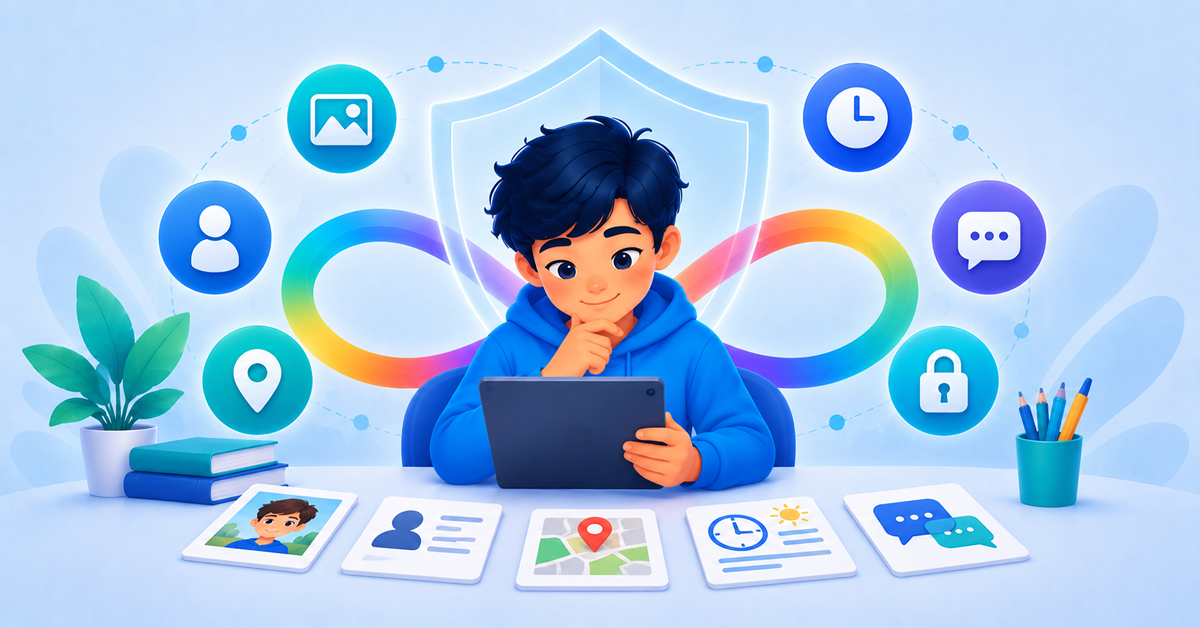
A long list of forbidden information can be difficult to remember; grouping details by what they reveal may be easier. Information can identify a person, show where they are, describe their routine, provide a way to contact them or allow access to an account.
Learners can then practise spotting these details in profiles, photographs and realistic messages.
The appropriate level of support will vary; one young person may be able to review privacy settings independently, whilst another may use an agreed checking routine before posting anything publicly. Both can develop a better understanding of what information reveals and where it may travel.
Safe Internet and Digital Use for Children with Autism (SIDUCA)’s approach to privacy should go beyond memorising a list of details that must never be shared; children need help to recognise the less obvious information contained in everyday online activity and decide when asking before sharing is the sensible choice.