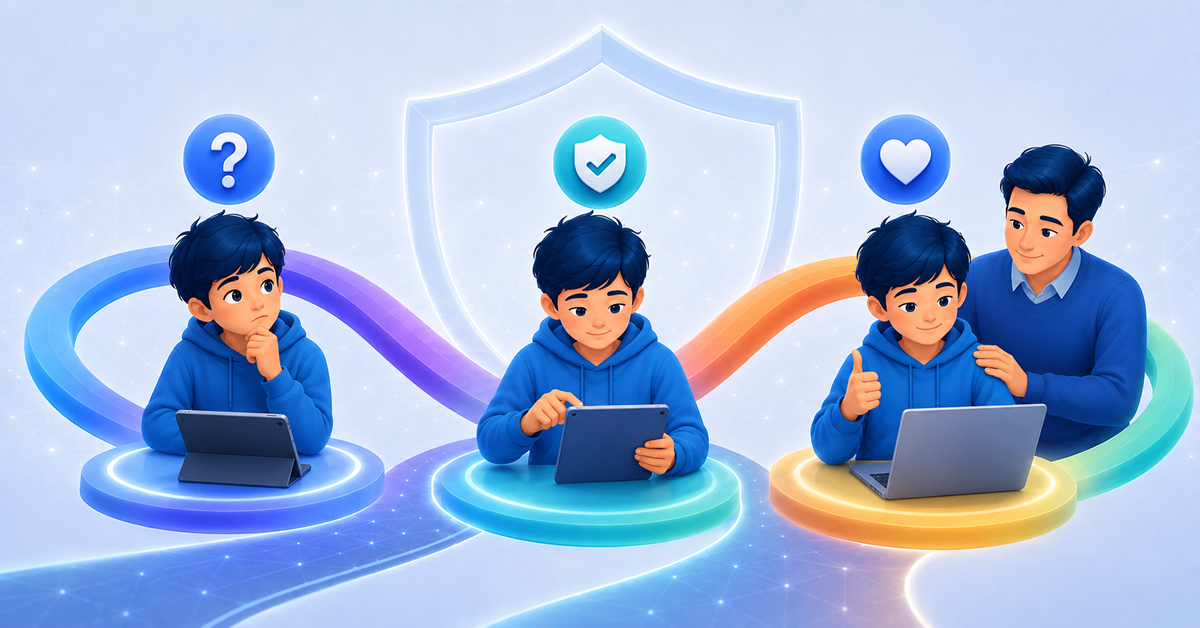
Online safety advice often follows a clear sequence; recognise the danger, make the right choice and avoid the harmful outcome.
Real situations are rarely that straight-forward.
A child might respond to a convincing message, share information without realising how it could be used or continue a conversation that later becomes uncomfortable; sometimes the problem becomes clear only after the first decision has been made.
Effective online safety education should help children make safer choices; it should also teach them what they can do when something has already gone wrong.
Why Knowing a Rule May Not Be Enough
Unsafe choices are not always caused by carelessness or a lack of knowledge.
A message may arrive when the child is excited, distracted or upset; the sender could create urgency, offer a reward or pretend to be someone familiar. The child may recognise that a request is unusual but worry that refusing it will end a friendship or cause trouble.
Adults respond to the same pressures; scams and manipulative designs work because people do not make every decision with unlimited time and perfect information.
A child may be able to repeat a safety rule during a lesson and still fail to recognise it in a different setting; knowing the rule and applying it under pressure are separate stages of learning.
What Happens Next Matters
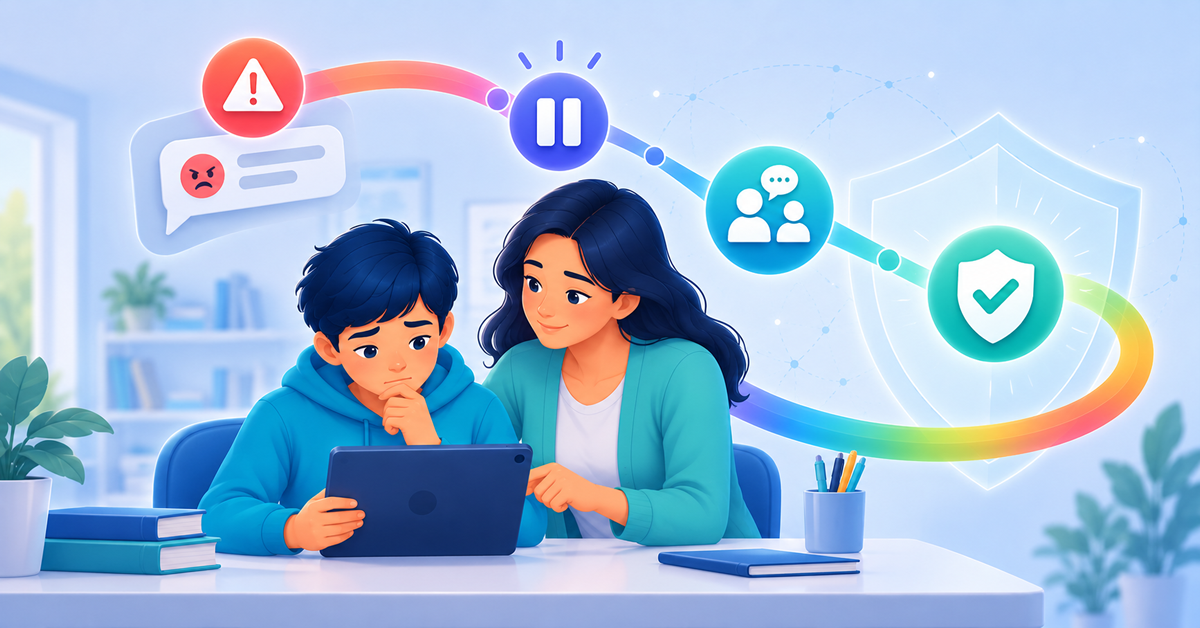
Stopping contact, changing a password, preserving a message or asking for help may prevent an incident from becoming more serious.
If money, information or images have already been shared, support is still worthwhile; children should not be expected to resolve these situations alone or believe that ignoring earlier advice removes their right to ask for help.
The safest available action changes as the situation develops; before responding it might be pausing and checking, afterwards it may be reporting an account, securing a password or showing the conversation to an adult.
Online safety activities often end at the first decision; should the character click, reply or share? Some examples should continue beyond that point.
A learner could be told that the character has already clicked a link and then asked what they should do; this shows that one unsafe choice does not remove every opportunity to reduce the harm.
Understanding Rather Than Blaming
There may be consequences after an online incident, particularly where access or account settings need to change for the child’s protection; anger on its own is unlikely to explain what went wrong.
Once the immediate concern has been addressed, the child and adult can look at why the message or request was convincing.
- Did it appear to come from a friend?
- Was there a countdown?
- Did the child fear losing a reward or being excluded?
The answer can lead to a practical response; a new checking routine, a change to account security or practice with similar examples may be more useful than repeating the rule that was missed.
Children are more likely to hide mistakes if they believe adults expect perfect behaviour; it should be clear that a concern can still be reported when a boundary has been crossed or a rule broken.
This does not require adults to approve of the first decision; it places immediate safety ahead of blame and helps keep a route to support open.
A Realistic View of Progress
Progress may involve recognising a suspicious request before responding; it might also mean noticing a mistake sooner, stopping further contact or feeling able to tell somebody what happened.
Some children will continue to need substantial support when using technology; their progress should not be dismissed because complete independence is not a realistic outcome.
Safe Internet and Digital Use for Children with Autism (SIDUCA)’s approach should prepare learners for imperfect situations as well as ideal decisions; children need opportunities to practise recognising risk, but they should also know how to recover, reduce further harm and seek help.
Nobody makes the right decision every time, online safety becomes more practical when children understand that what they do next can still matter.