
Introduction
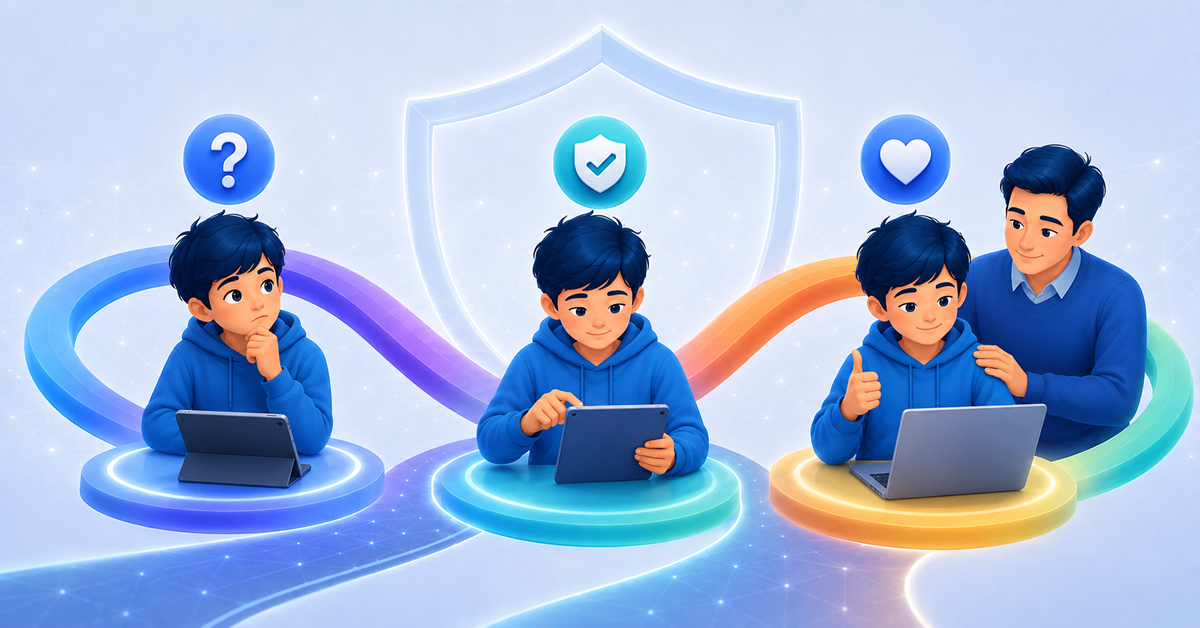
Many family conversations about online safety begin after something has gone wrong.
A parent discovers an unexpected payment, sees an upsetting message or learns that personal information has been shared; the discussion then takes place when the child and adult are already worried, frustrated or angry.
Some situations do require an immediate response, even so, a crisis should not be the only time families discuss what happens online; ordinary conversations can make it easier for a child to raise a concern before it becomes more serious.
Understanding What the Child Does Online
Taking an interest in a child’s favourite game or online activity gives later conversations some context.
A parent does not have to understand every feature or share the child’s enthusiasm; asking what they enjoy, how the game works or who they usually play with can still provide a useful picture of that part of their life.
The tone matters; if every question feels like an inspection then the child may offer as little information as possible, it should be possible to show genuine interest while retaining appropriate supervision and boundaries.
Specific questions can also be easier to answer than “Are you safe online?” That question asks the child to decide what safety means and review everything they have done.
It may be more helpful to ask whether anyone sent a confusing message, requested secrecy, continued making contact after being asked to stop or encouraged them to buy something; these are prompts for a conversation, not a checklist that needs to be used after every online session.
Agreeing What Happens Next
Children may hide problems because they expect an immediate ban.
Parents cannot guarantee that access will never need to change; sometimes blocking contact, restricting an account or removing a device temporarily may be necessary. Families can still agree that asking for help will begin with listening and finding out what happened.
Explaining possible actions beforehand can make the process less unpredictable; the adult may need to save a screenshot, alter a setting, report an account or contact the school. Wherever possible, the child should understand what is being done and why.
Everyday routines can prevent some decisions from becoming arguments; a child might check before adding a new contact, making a purchase or sharing a photograph that reveals their location. Password and privacy reviews can happen at agreed times instead of only after a problem.
These arrangements should reflect the individual child; the level of supervision appropriate for one young person could be unnecessary, or insufficient for another.
When Mistakes Happen
Children will sometimes make poor choices online, adults do too.
Once any immediate risk has been addressed, it can be useful to look at why the decision made sense at the time.
- Was the child under pressure?
- Did the message appear to come from somebody familiar?
- Were they worried about losing something in a game or getting into trouble?
The answer may suggest a practical change, such as a clearer checking routine, different account setting or another way to ask for help; repeating the original rule is less useful if the child did not recognise that it applied to the situation.
Technical controls and supervision remain important, particularly where a child needs substantial support; they cannot cover every situation or explain the reason behind every boundary.
Safe Internet and Digital Use for Children with Autism (SIDUCA)’s future family guidance should help parents start useful conversations without expecting them to become experts in every platform; often, the most important step is creating enough trust for a child to show an adult what is happening.