What does SIDUCA stand for?
SIDUCA stands for Safe Internet and Digital Use for Children with Autism.
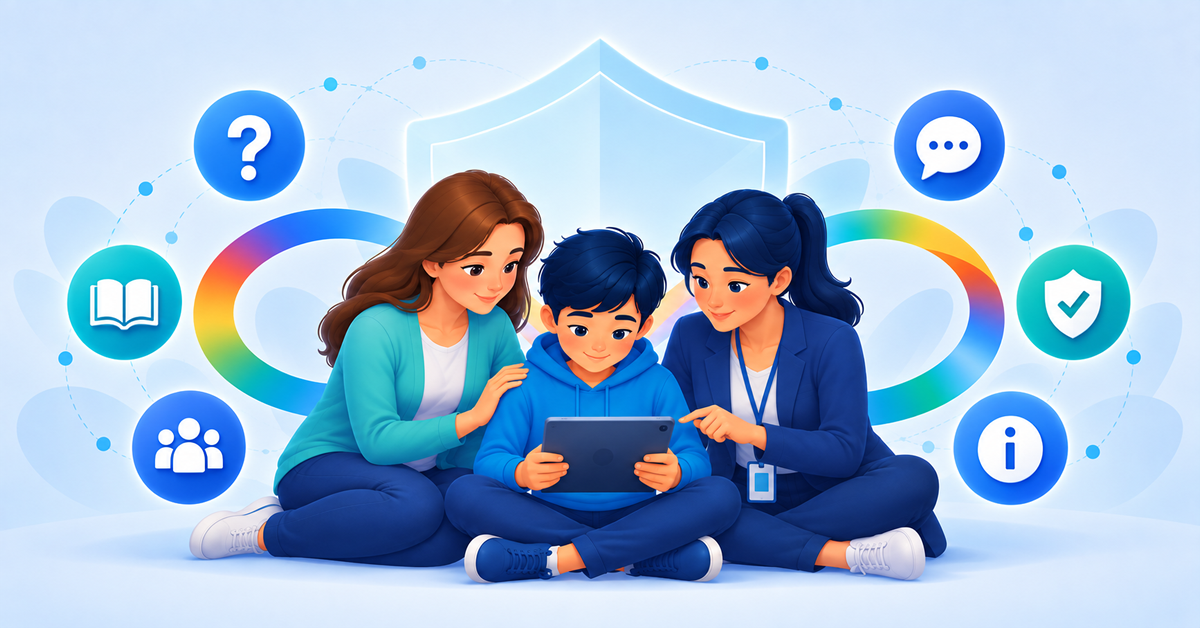
It is an educational initiative focused on helping autistic children and young people understand online situations, make informed decisions and use digital technology with greater confidence and safety.
Why is SIDUCA needed?
Existing online safety resources provide a useful foundation, but they may not always reflect the communication, learning and support needs of autistic children and young people.
General advice can also rely on implied social rules or broad instructions such as “be careful online”; SIDUCA will provide clearer explanations, recognisable examples and practical ways to respond when an online situation is confusing or unsafe.
Is SIDUCA only concerned with online risks?
No; the internet can support learning, communication, entertainment, friendships, creativity and independence.
SIDUCA takes these benefits seriously; its purpose is not to make technology seem frightening or to encourage unnecessary restrictions, it is about helping children and young people take part in digital life with a better understanding of the risks and the choices available to them.
Does SIDUCA assume that all autistic children have the same needs?
No; autism does not lead to one predictable set of abilities, experiences or online safety needs.
A person’s age, communication, understanding, confidence, previous experiences and level of independence can all affect the support that is useful; therefore SIDUCA’s resources will be designed to allow appropriate adaptation rather than expecting one approach to work for everyone.
What stage of development has SIDUCA reached?
SIDUCA currently has a strategic framework, defined audiences and an initial approach to learning, delivery, safeguarding and future development.
The next stage is to turn that foundation into practical resources and courses; these will need consultation, review and testing before they are made widely available.
Who will SIDUCA support?
Autistic children and young people are at the centre of SIDUCA’s work.
The project will also support the people and organisations around them, including parents and carers, education professionals, health and care services, community organisations, safeguarding specialists and digital professionals.
What ages will the resources be suitable for?
Resources will be developed for different ages and stages of understanding; SIDUCA will not rely on one version of a resource for every learner.
Age will be one consideration, but it will not be the only one; communication, experience, comprehension and the level of support a learner needs may be just as important.
Will children and young people be able to use the resources independently?
Some resources may be suitable for independent use, while others will work best with support from a parent, carer, teacher or another trusted adult.
The amount of support needed will depend on the learner, the subject and the activity; where adult support is recommended, the resource will make this clear.
Will autistic children and young people help shape the resources?
Yes; resources intended for autistic learners should not be developed without listening to autistic people.
Consultation and testing will be introduced as the project progresses; appropriate consent, safeguarding, privacy and accessibility arrangements will be put in place before children or young people take part.
Are SIDUCA courses available now?
Not yet; courses are currently in development.
News about consultation, pilot activities and future release dates will be published on the website; visitors can also subscribe to receive occasional SIDUCA updates.
What subjects will SIDUCA cover?
Planned subjects include:
- Personal information and privacy.
- Passwords and account security.
- Online communication and friendships.
- Gaming and in-app purchases.
- Social media and live streaming.
- Scams and misleading information.
- Cyberbullying and harassment.
- Pressure, manipulation and exploitation.
- Harmful or inappropriate content.
- Blocking, reporting and asking for help.
The order in which these subjects are developed will depend on consultation, available resources and the priorities identified for the first pilot.
What will SIDUCA courses look like?
Courses are expected to combine straightforward explanations with familiar situations, practical activities and opportunities for discussion.
The emphasis will be on understanding and decision-making, rather than memorising a list of dangers; learners should be able to recognise a situation, consider what they could do and know where to seek help.
Will SIDUCA provide downloadable resources?
Downloadable guidance and learning materials are planned as part of the wider resource library.
The precise formats have not yet been finalised; accessibility, ease of use and the needs of different audiences will guide decisions about worksheets, presentations, videos, supporting guidance and other materials.
Will the resources be free?
Pricing and access arrangements have not yet been finalised.
SIDUCA’s funding and revenue model is intended to balance accessibility with the cost of developing, reviewing and maintaining high-quality resources. Any charges, licences or free-access arrangements will be explained clearly before materials are released.
Will SIDUCA courses lead to certificates?
Certification options form part of SIDUCA’s longer-term development plans, but no certified course is currently available.
Any future certificate will need a clear purpose and appropriate standards; SIDUCA will not suggest that a course is formally accredited unless that accreditation has been independently confirmed.
Are SIDUCA courses accredited?
No SIDUCA course is currently accredited.
Accreditation may be explored when suitable courses have been developed, reviewed and tested; details will only be published once an arrangement has been formally agreed with an appropriate body.
How will SIDUCA help parents and carers?
SIDUCA will provide practical guidance for everyday issues such as boundaries, privacy, gaming, social media, online friendships, unwanted contact and responding when something has gone wrong.
The guidance will recognise the difficult balance between protecting a child and helping them develop independence; it will not assume that removing devices or blocking access is always the most appropriate response.
How will SIDUCA support schools and colleges?
Resources will be designed to complement existing curriculum, safeguarding and pastoral work.
Education professionals may use them for lessons, small-group activities, individual support or conversations following a particular concern; supporting guidance will help staff adapt delivery without losing the main learning or safeguarding message.
Is SIDUCA only for specialist autism settings?
No; resources may be useful in specialist schools, mainstream schools, colleges, alternative provision, home education and other learning environments.
The setting matters, but the needs of the learner and the way the material is delivered matter more.
Can health, care and community organisations use SIDUCA resources?
Yes; health, social care, youth, voluntary and community organisations may all encounter digital safety concerns through their work with autistic children, young people and families.
SIDUCA will provide material that can be used alongside person-centred support, professional assessment and established safeguarding procedures.
How can digital and safeguarding professionals contribute?
Professionals may be able to support SIDUCA through expert review, consultation, research, accessibility advice, pilot evaluation, policy development, technical guidance or professional training.
Specific opportunities will be published as the project moves into consultation and practical development.
Is SIDUCA a safeguarding service?
No; SIDUCA is an educational initiative. It does not provide emergency assistance, investigate incidents or manage individual safeguarding cases.
Anyone with an immediate concern should use the appropriate reporting route through the police, emergency services, local safeguarding services, a school or college, the relevant organisation or the online platform involved.
What should I do if a child is in immediate danger?
Call 999 if someone is in immediate danger or a crime is taking place.
For concerns that are not an emergency, contact the appropriate safeguarding service, the child’s school or organisation, the police through a non-emergency route, or a relevant specialist service.
Can I report online harm to SIDUCA?
SIDUCA is not an incident-reporting service and cannot investigate reports about individuals, organisations or online accounts.
Concerns should be reported through the appropriate safeguarding, police, school, organisational or platform route; SIDUCA resources will provide clear signposting wherever possible.
Does SIDUCA replace professional safeguarding advice?
No; SIDUCA’s resources will sit alongside statutory guidance, organisational policies, professional judgement and established reporting procedures.
They will provide focused educational support, but they will not replace specialist assessment, legal responsibilities or decisions made by the professionals responsible for a child’s welfare.
Will using SIDUCA resources prevent online harm?
No educational resource can remove every risk.
SIDUCA can help children, families and professionals understand online situations, make better-informed decisions and respond more effectively; technical safeguards, appropriate supervision, open communication and established safeguarding procedures will still be important.
How will SIDUCA make sure its resources are accurate?
Resources will draw on recognised online safety and safeguarding practice, relevant evidence, professional review and consultation with people who have direct experience.
Materials will also need regular review because technology, online services and patterns of harm change over time.
How will SIDUCA test whether its resources work?
Testing will look beyond whether participants enjoyed a resource.
Depending on the course or activity, SIDUCA will consider whether it improved understanding, confidence, decision-making, recognition of risk, help-seeking or the ability to apply learning in a realistic situation.
Can my school or organisation take part in a pilot?
Pilot opportunities are planned, although none are currently open.
Schools, services and organisations interested in future participation can contact SIDUCA or subscribe for project updates; more detailed eligibility and safeguarding arrangements will be provided for each pilot.
Can parents, carers and autistic people contribute ideas?
Yes; feedback from autistic people, parents, carers and professionals will be important throughout development.
There will be structured opportunities to contribute when SIDUCA is ready to consult on specific subjects or resources; this will make feedback easier to use and ensure that participation is managed appropriately.
Can organisations partner with SIDUCA?
SIDUCA is open to appropriate partnerships that can improve the quality, reach, evidence base or sustainability of its work.
Potential partners may include education providers, charities, health and care organisations, researchers, safeguarding bodies, technology specialists and funders. Any partnership must support SIDUCA’s purpose and maintain its child-centred and independent approach.
How can I receive updates?
Visitors can subscribe through the website to receive occasional news about SIDUCA’s development, new resources, consultation, pilot opportunities and course releases.
Updates will only be sent when there is something relevant to share, and subscribers can unsubscribe at any time.
How can I contact SIDUCA?
Use the Contact Us page for general enquiries, professional interest, partnership discussions or questions about future consultation and pilots.
Please do not use the contact form to report an emergency or an individual safeguarding incident.