Introduction
Online safety education often concentrates on what a child should do independently; recognise a risk, protect personal information, block an account or avoid a suspicious link.
These are useful skills, but independence should not be the only measure of success; knowing when and how to ask for help is just as important.
A child may remain silent because they do not recognise that something is wrong, they may also know that a situation is worrying but find it difficult to explain.
Some children fear losing access to a device, game or online friendship; others expect to be blamed because they replied to a message, shared information or ignored an earlier rule. Previous experience matters too; if an adult dismissed an earlier concern, the child may decide there is little point in raising another one.
What appears minor to an adult can still feel very serious to the child; a lost in-game item, an argument in a group or persistent messages from another player may cause considerable distress. Listening to these concerns helps establish that asking for support is worthwhile.
Making the Advice More Specific
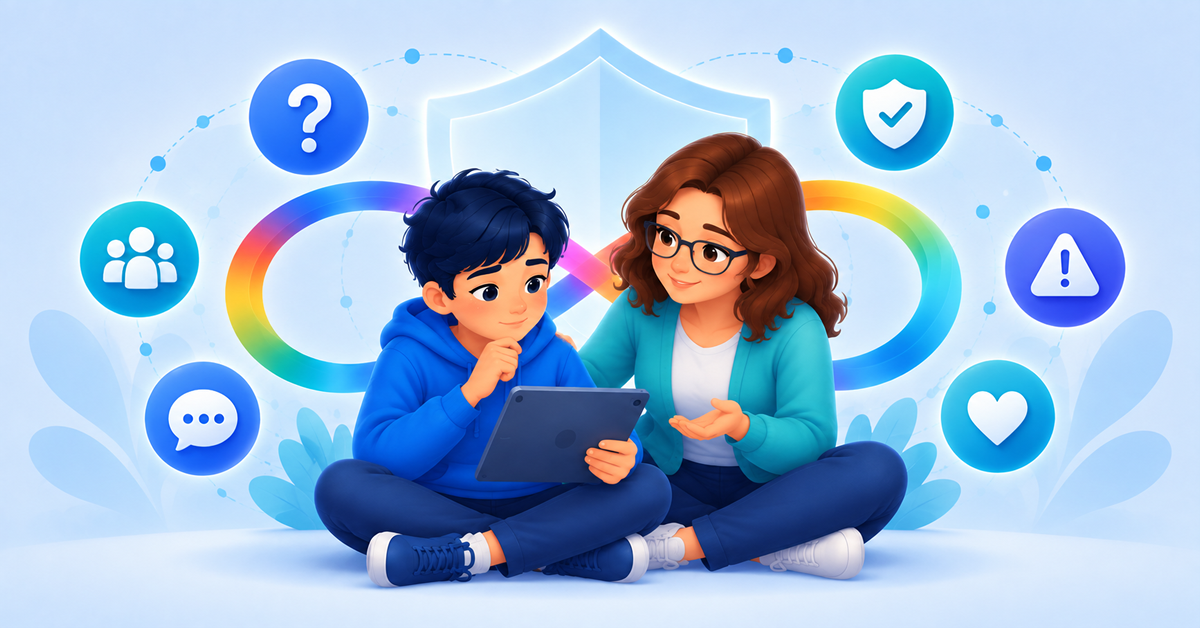
“Tell a trusted adult” is common advice; it assumes the child knows who that person is, how to approach them and what to say.
Identifying particular people in advance makes the instruction clearer; depending on the child, this could include a parent, teacher, teaching assistant, safeguarding lead or another adult familiar with their communication and support needs.
There should be another option if the first person is unavailable or fails to understand. Asking somebody else is not disobedient or an overreaction.
Speaking face to face may not suit every child; some may find it easier to show an adult the message, use an agreed phrase or card, write down what happened or send a text. The method is less important than having a reliable way to signal that help is needed.
The Adult’s First Response
Adults cannot promise that an online incident will never result in a change to an account or access to a device; they can however make sure their first response is focused on understanding the situation and checking whether anybody is at immediate risk.
Further action might involve saving evidence, blocking or reporting an account, changing a password or following safeguarding procedures; where appropriate, the child should be told what is happening and why.
A simple acknowledgement such as “I’m glad you showed me” can be valuable; it separates the decision to seek support from any mistake that happened beforehand.
Seeking help can also be practised before a serious incident occurs; an unexpected login alert, confusing request or unfamiliar privacy option can all provide a reason to stop and check. Children can rehearse who they would approach, what they could show them and what to do if that person is busy.
A child who notices that something feels wrong and uses an agreed way to alert an adult has made a meaningful safety decision; some learners may gradually require less support, while others will continue to need close assistance when using technology.
Neither situation makes asking for help a lesser outcome; sometimes, the safest decision is recognising that a problem should not be handled alone.