Introduction
It is easy for a project to say that it will listen to autistic people and families; the more difficult questions are when that listening takes place, who is able to contribute and whether their views are allowed to change the work.
Consultation has limited value if people are shown an almost finished resource and asked whether they like it. By then, the subject, assumptions, language and format may already have been decided; there may be scope to change a few words or images, but little opportunity to question the thinking behind the resource.
For Safe Internet and Digital Use for Children with Autism (SIDUCA), consultation should begin earlier and continue as the work develops. Autistic children and young people, families and relevant professionals should be able to influence what is created, rather than simply comment on it once the important decisions have been made.
Understanding the Problem First
Online safety guidance is often based on concerns identified by adults or organisations; those concerns may be valid, but they will not always reflect the situations that autistic children and young people find most confusing.
A child may understand the dangers associated with an obvious stranger but place complete trust in someone they have known through a game for several months; a parent may need practical help responding to repeated in-game purchases rather than another general explanation of screen time, whilst a teacher may find that existing resources depend on implied social rules or written language that some learners find difficult to interpret.
Listening to these experiences can help SIDUCA identify where current guidance works, where it leaves gaps and where a different approach may be useful.
It may also change how a problem is understood; what may initially appears to be a lack of knowledge could be caused by unclear language, an inaccessible reporting process or conflicting expectations between home and school.
Autistic people should therefore have opportunities to help define the problem; asking for their opinion only after a solution has been designed is too late to influence many of the decisions that matter.
Hearing More Than One Perspective
No individual can speak for every autistic person or family.
Children and young people differ in age, communication, interests, support needs and experience of using technology. One child may need close supervision whenever they go online, whilst another may manage several accounts independently but find it difficult to recognise emotional pressure or dishonest behaviour.
Families also have different experiences; advice that is manageable in one household may be unrealistic in another because of time, technology, cost or the support available. Schools and organisations face their own practical limits, including staffing, timetables and existing safeguarding arrangements.
Consultation should reflect this variety as far as possible. It should not rely only on the people who are comfortable speaking in a group, responding quickly or completing a written questionnaire.
This does not mean that every consultation exercise can include every possible perspective; SIDUCA will need to be honest about who took part, which voices may be missing and how much weight can reasonably be placed on the findings.
A small group can provide valuable insight; it cannot demonstrate that a resource will work for everyone.
Making Consultation Accessible and Safe
Consultation needs to be accessible in its own right.
A group meeting may suit some contributors, while others would prefer an individual conversation, written questions, visual choices or a supported activity. Providing information in advance can give people time to understand what is being discussed and decide what they want to say.
The questions need some thought too; asking whether somebody likes a resource may produce little more than a yes or no. It is more useful to ask which parts were unclear, whether an example felt realistic, what the person thought they were being asked to do or what seemed to be missing.
Children and young people should not have to disclose upsetting personal experiences to make a worthwhile contribution. Online safety can involve sensitive subjects, including bullying, grooming, exploitation and harmful content; therefore consultation activities need clear boundaries and suitable safeguarding arrangements.
Participation should be voluntary; contributors need to understand what they are being asked to do, how their comments will be used and whether anything will be recorded or shared. Work involving children will also require appropriate consent, privacy and data-protection arrangements.
The time and experience people contribute should be respected; expectations should be clear from the beginning, including any arrangements for payment, recognition or reimbursement of expenses.
Combining Lived and Professional Experience
Families can explain how online issues affect everyday life; they may identify practical problems that do not appear in formal guidance or explain why a recommendation that sounds sensible is difficult to follow at home.
Their perspective is important, but it should not be treated as a replacement for the views of autistic children and young people; the experiences are connected, but they are not the same.
Professionals bring other forms of knowledge; teachers and teaching assistants can identify whether an activity is realistic within a classroom and whether the instructions are suitable for different learners and Safeguarding practitioners can challenge incomplete or potentially unsafe advice and consider how a resource might affect the handling of a disclosure.
Technology and information security specialists can check guidance about accounts, privacy, reporting systems and current online threats; this review will be important because platforms and security practices change, sometimes quickly.
Researchers can help separate established evidence from professional opinion or ideas that still need testing; evidence should inform the work, but it also needs to be translated into material that families and learners can understand and use.
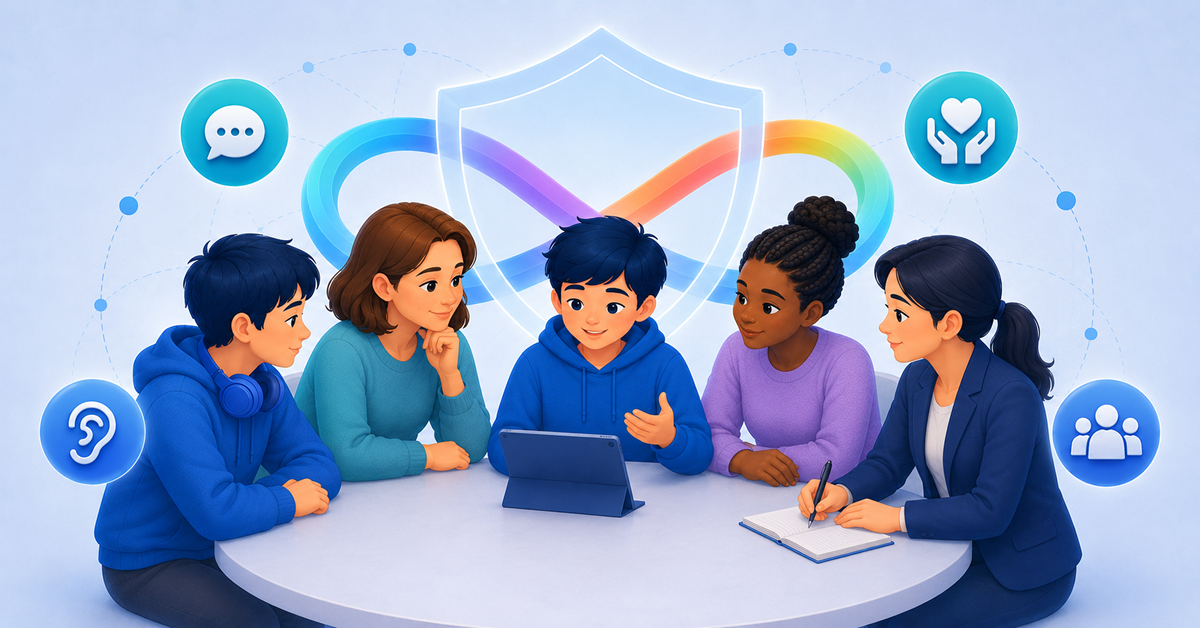
None of these perspectives is sufficient on its own; bringing them together should help SIDUCA balance lived experience, practical use, safeguarding and technical accuracy.
Giving Feedback Time to Make a Difference
Consultation should take place at more than one point.
Early conversations can help identify the subject and the difficulties a resource needs to address; rough outlines can then be reviewed before a large amount of time is spent writing and designing them.
At that stage, somebody may point out that an example is unrealistic, a planned activity is unsuitable or an important concern has been overlooked; making a change is far easier while the material is still an outline.
Later drafts can be reviewed for clarity and practical use.
- Does the learner understand the instructions?
- Does the visual convey the intended idea?
- Can the parent or teacher see how the activity should be used?
- Is the suggested length realistic?
Sometimes the answer will require a minor amendment; at other times, an activity may need to be reconsidered completely.
That possibility must be accepted; consultation is not meaningful if feedback is welcomed only when it supports decisions that have already been made.
Testing How Resources Work in Practice
A resource can look clear on a screen and still be difficult to use in a classroom or family home.
Instructions that appear straightforward to the writer may be interpreted differently by a learner; an illustration intended to clarify an idea may cause confusion, whilst an activity planned for 20 minutes may take much longer once discussion and processing time are allowed.
Testing should therefore look beyond presentation; it needs to consider how people understand the material, how it fits into the intended setting and whether it supports the learning outcome it was created to address.
Early testing is likely to involve relatively small numbers; the results may improve the resource, but they should not be presented as proof that it is effective for all autistic learners.
Where possible, testing should include different settings and different support needs; feedback from parents and practitioners will help assess whether a resource is practical to deliver, but the learner’s experience should remain central.
Dealing With Different Opinions
Consultation will not always produce agreement.
One person may prefer direct and firm language, while another finds the same wording alarming; a visual layout may help one learner and distract another, whilst parents, professionals and young people may also have different views about supervision, independence and acceptable risk.
Consultation is not simply a vote in which the most popular suggestion wins; feedback needs to be considered alongside safeguarding duties, technical accuracy, evidence and the purpose of the resource.
In some cases, disagreement may show that alternative formats are needed, in others, it may identify a question that requires further research or specialist advice; there may also be times when SIDUCA decides not to make a suggested change.
Those decisions should be recorded, particularly when the feedback is significant; keeping a clear account of what was raised and how it was considered will make the development process more accountable.
Showing What Consultation Changed
People who give their time should be able to see that their contribution had a purpose.
Not every suggestion can be accepted, but contributors should be told how their feedback was considered and, where possible, what changed as a result. This might be shared through a short summary explaining who was involved, the main issues raised and the action taken.
The same summary should acknowledge limitations; if only a small number of people took part, or if particular groups were not represented, that should be stated plainly.
This helps distinguish meaningful consultation from an approval exercise; it also gives future reviewers a better understanding of how and why the resource developed.
Consultation should not end when something is published; technology changes, new risks appear and people may use a resource in ways that were not anticipated. Feedback from families, learners and practitioners can reveal problems that did not emerge during early testing.
Review dates and version information should make it clear when material was last checked and whether important changes have been made.
SIDUCA is still considering how consultation and testing can be structured in a way that is proportionate to the project’s current stage, resources and safeguarding responsibilities. Further information will be published as those arrangements become clearer.
This approach will take longer than developing material behind closed doors; it may complicate decisions and sometimes require work to be redone. Those are not reasons to avoid it.
Listening early enough for people’s experience to influence the outcome should reduce the risk of producing resources that look complete but do not work well for the people expected to use them.