Introduction
There is no single classroom, family or autistic learner for whom one fixed online safety course could be entirely suitable.
Communication preferences, reading levels and digital experience all differ; so do sensory needs, support arrangements and the ways children show what they understand. A resource written with one assumed learner in mind may work well for some people while creating unnecessary barriers for others.
The setting makes a difference too. A teacher delivering a planned lesson to a class has different needs from a teaching assistant working with one child. A parent may want to use a short activity during a conversation at home, while a specialist organisation may be looking for material that fits within a longer programme.
Safe Internet and Digital Use for Children with Autism (SIDUCA) is therefore being planned as a set of connected modules rather than one course that must always be followed in the same order.
Alignment with Existing Work
Many schools and organisations already teach online safety through safeguarding, computing or personal, social, health and economic education; some will have established materials that work well for their learners.
SIDUCA should add to that work rather than require it to be replaced.
Individual modules could be used to address a particular need, support an existing lesson or provide a different way of explaining a subject; these may cover areas such as personal information, passwords, online communication, relationships, scams, misleading content, digital wellbeing and asking for help.
A school might use one module with a class and return to it later at a more advanced level, a parent could use a related activity after a particular issue arises at home and another organisation may bring several modules together as part of a structured programme.
The subjects will often overlap; understanding personal information is relevant to privacy settings, online friendships and recognising scams. Learning how to ask for help is important across almost every area and so the structure will need to make those connections clear without forcing every learner through all of the material at once.
Changes
Allowing a resource to be adapted does not mean that its purpose becomes optional.
The main learning outcome should remain clear, and safeguarding advice must stay accurate; language, pace, examples and activities can change, but the adjustment should not remove the judgement or skill the learner is meant to develop.
A session about suspicious messages offers a simple example; one group might read and discuss sample messages, another could arrange visual cards to show the order in which they would respond, whilst an individual learner may work through the same situation with a trusted adult.
The activity is different in each case, but the central idea remains; recognising signs of pressure or deception and checking before acting.
Anyone using SIDUCA material should be able to see which parts are essential and where there is room to adapt. Facilitator guidance will therefore be important; it can explain the aim of the activity, suggest alternative ways of presenting it and identify the understanding that should remain intact.
Otherwise, a well-intended adjustment could make a resource easier to deliver while quietly changing what it teaches.
Language and Examples That Make Sense
Online safety materials can become difficult to use when they rely on abstract terms, implied meanings or long written explanations.
SIDUCA resources should use straightforward language wherever possible; instructions need to be clear about what the learner is being asked to do. When an idea cannot be simplified without losing something important, it may need to be divided into smaller steps.
Examples also need to feel relevant; a scenario based on a platform the learner has never used may have little meaning, whilst referring to a familiar game, message or type of online activity can make the situation easier to understand.
At the same time, resources should not depend too heavily on one app or website; platforms change, features move and popular services fall out of use. The wider lesson should still make sense when the technology changes.
A message that pressures someone to act quickly is a useful example because the behaviour can appear in many places; it might arrive through email, social media, a game or a messaging service. Recognising the pressure is more valuable in the long term than memorising where a particular button appears on one platform.
The detail will also need to suit the learner; a younger child may begin by identifying which information is private, whilst an older or more experienced learner might explore how several ordinary details can be combined to identify someone.
Both are learning about privacy, but they are not ready for the same activity.
Different Ways to Take Part
Not every learner will be comfortable with a group discussion or able to demonstrate understanding through writing.
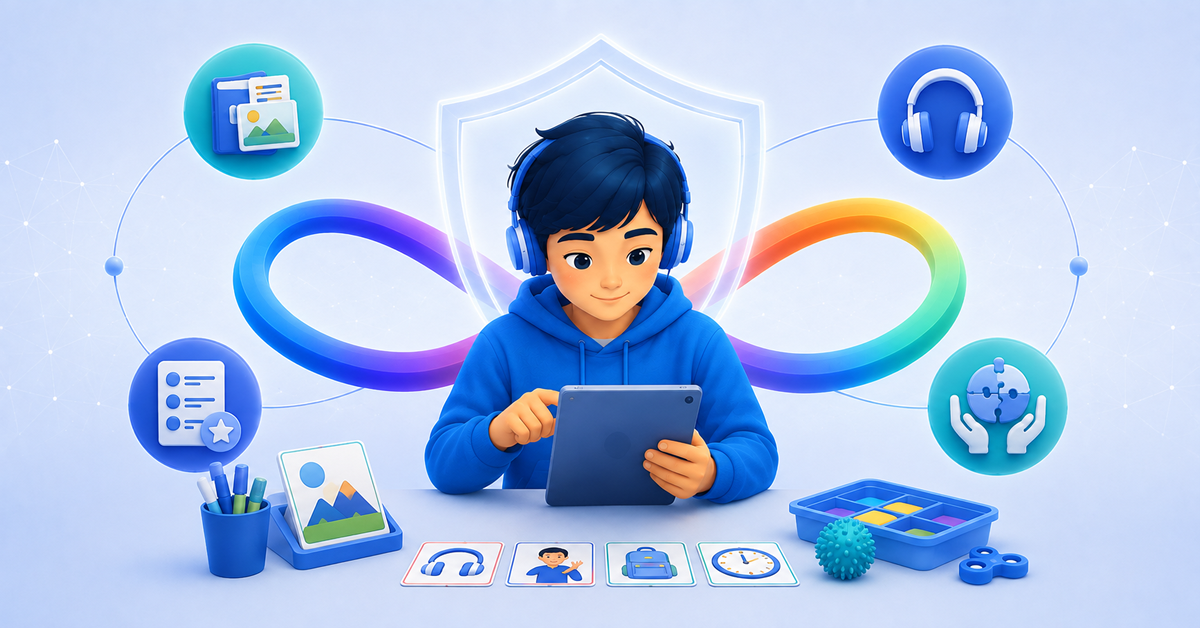
Some children may prefer to talk through a situation; others might respond through visual choices, matching activities, sequencing or practical use of a device. Role play can be useful for some learners and uncomfortable for others.
Where possible, resources should provide alternatives; a speaking activity might have a written or visual version, a longer session could be divided into shorter sections or a exercise designed for a group may be adapted for individual work.
This is not about removing all difficulty from the learning; online situations can be complicated, and children need opportunities to think about subjects that are not always comfortable or straightforward.
The purpose of adaptation is to remove barriers that are unrelated to the learning itself; a child should not appear to lack online safety understanding simply because the only available way to demonstrate it does not suit their communication needs.
Building Accessibility into the Resource
Accessibility needs to be considered before the material is written and designed, rather than added afterwards.
A predictable structure, uncluttered layout and clear presentation can make a resource easier to use; visual elements should help explain the content rather than simply decorate the page, colour should not be the only way information is communicated and text should remain readable when enlarged.
Digital resources will also need to consider keyboard access, screen readers, captions, transcripts and alternative text where relevant; printable versions should remain understandable if they are produced on a basic printer or without colour.
Sensory and cognitive accessibility matter just as much; too much information on one page, unnecessary animation or several competing activities can distract from the intended message. A calm design may help, but no single appearance will be right for every learner.
Providing alternative formats and making sensible adaptation possible should reduce the need for parents and practitioners to rebuild materials from the beginning.
Guidance for the Adults Involved
Adaptable resources still need enough guidance to be used safely.
Teachers, parents and other practitioners should be able to identify the purpose of an activity, the preparation required and any issues that may need particular care. Guidance may also suggest questions, highlight common misunderstandings and explain how an activity can be adjusted.
Some online safety subjects may lead a child to disclose something that has happened to them; the person delivering the resource needs to know that a disclosure should be handled through the relevant safeguarding arrangements. SIDUCA material cannot replace an organisation’s policies or the judgement of trained professionals.
Guidance should support adults without giving the impression that every autistic learner will respond in the same way; it needs to leave room for knowledge of the individual child.
What Works in One Place May Not Work in Another
A resource can be well designed and still need to be used differently at school and at home.
A classroom lesson has a timetable, learning objective and group of children to manage, whilst a conversation at home may begin because something has just happened online, a support worker may revisit the same subject gradually over several sessions.
Noise, time pressure, group size and familiarity with the person delivering the activity can all affect engagement; a child who shows clear understanding during a quiet individual session may find the same task much harder in a busy classroom.
The material should allow for these differences, although it cannot remove the need for judgement from the adult supporting the learner.
Testing Before Treating Resources as Established
Something that appears accessible during development may work differently once it reaches a classroom or family home.
Instructions that seem clear to the writer may be interpreted in an unexpected way; a visual intended to explain an idea may cause confusion and an activity planned for 20 minutes may take much longer once discussion and processing time are allowed.
Testing will therefore be an important part of development; resources should not be treated as settled simply because they look complete.
Feedback from autistic children and young people will be essential; families, educators and other practitioners can also comment on timing, preparation and whether the resource is realistic to use in their setting.
Review will need to continue after publication; technology, online behaviour and language change, therefore resources may need to be corrected, expanded or replaced as new risks and ways of using digital services emerge. Clear review dates and version information should help people identify whether they are using current material.
SIDUCA’s learning outcomes and safeguarding principles should remain recognisable wherever its resources are used; the route taken to reach those outcomes can be flexible.
For one learner, that may involve written scenarios and independent decisions; for another, it may require visual prompts, repetition and support from a trusted adult. What matters is whether the learner can engage with the material and use the understanding it is intended to develop.
The aim is to create a consistent SIDUCA approach that remains practical enough to work in real settings.