Introduction
Autistic children and young people are the reason Safe Internet and Digital Use for Children with Autism (SIDUCA) exists. However, responsibility for online safety cannot rest with them alone.
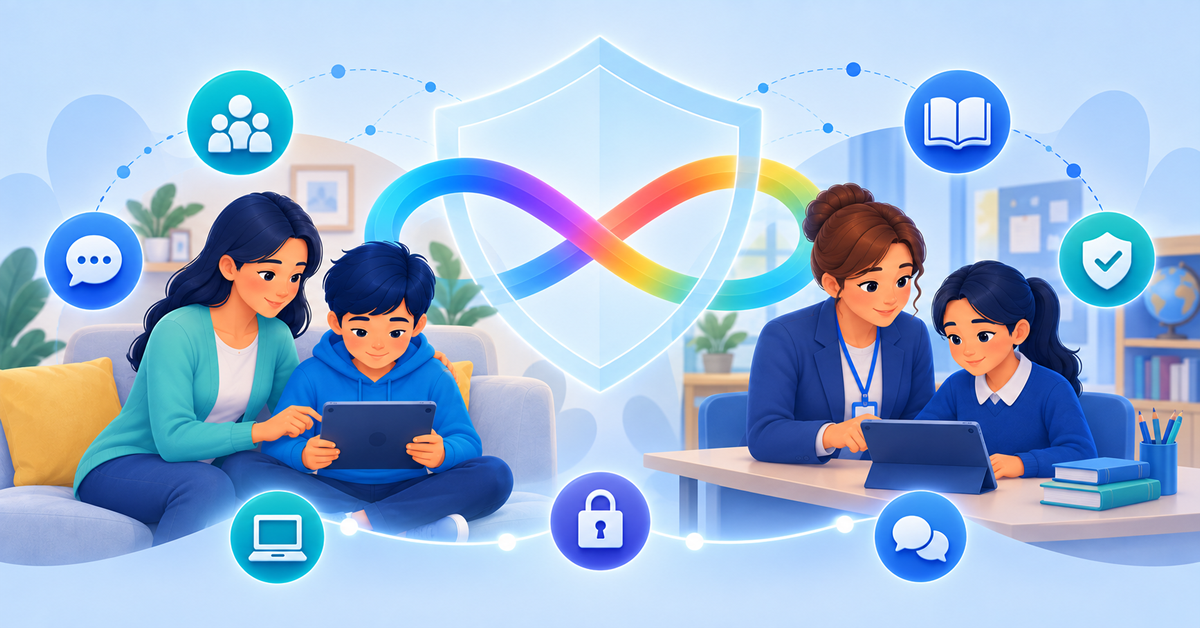
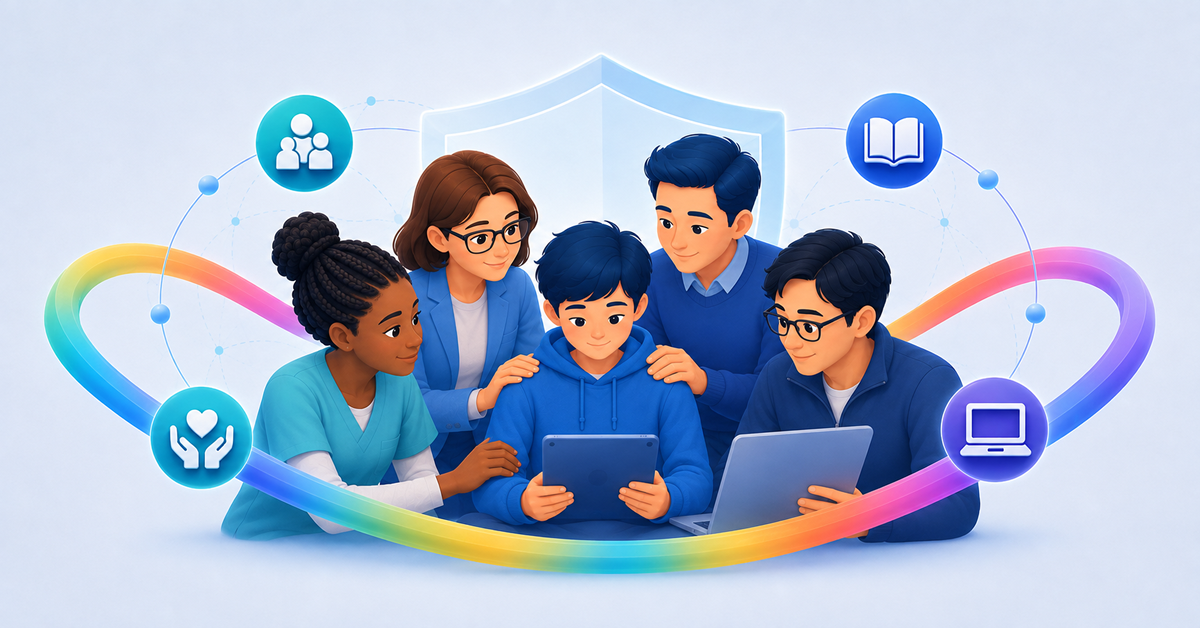
A child’s experience of technology is influenced by the people and organisations around them i.e.
- Parents and carers establish routines at home and are often the first to notice when something has changed.
- Schools teach online safety and respond to concerns.
- IT teams decide which systems can be accessed and what security measures are applied.
- Health, care and community professionals may become involved when online activity affects a child’s safety or wellbeing.
These groups are connected, but they do not all need the same information;. SIDUCA is therefore being developed around separate audience pathways, each shaped by the role that person or organisation plays.
Autistic Children and Young People
Children and young people will be at the centre of SIDUCA’s learning resources.
For a younger child, online safety may begin with straightforward ideas; what personal information means, why passwords should be kept private and which adults they can approach if something worries them. The information may need to be presented visually, introduced in small sections and revisited regularly.
Older children and teenagers are likely to encounter more complicated situations; they may form friendships through games or social media, manage their own accounts, make purchases or communicate with people they have never met in person. Discussions about trust, consent, online pressure, misleading information and personal boundaries become increasingly important.
Age is only one consideration; autistic children of the same age can have very different communication preferences, levels of understanding and experience of using technology. One child may need close support whenever they go online, another may use several platforms independently but find it difficult to recognise when somebody is being dishonest or applying emotional pressure.
This is why SIDUCA will need different levels and formats of learning rather than one course intended for everyone; a short visual explanation may work well for one learner, while another may benefit from realistic examples, discussion or practising how to respond to a particular situation.
Parents and Carers
Parents and carers make online safety decisions every day, often without clear answers.
They may need to decide when a child is ready for a particular game, device or social platform; they may have questions about parental controls, privacy settings, supervision or how much independence to allow. These decisions can be particularly difficult when general advice does not account for the child’s individual needs.
Families may also need support with conversations; explaining why a restriction has been introduced can be just as important as introducing it. Children are more likely to understand a boundary when they know what it is intended to protect them from.
When something has gone wrong, parents and carers need practical information about what to do next; this could include keeping relevant messages, changing account details, blocking or reporting another user and deciding whether further safeguarding advice is needed.
The guidance should be realistic; not every parent will have a strong technical background, and constant supervision is neither possible nor appropriate for every child. SIDUCA should help families make informed decisions without implying that every risk can be prevented.
Schools and Educational Employees
Teachers and teaching assistants are well placed to reinforce online safety learning over time; they may also notice concerns that have not been raised at home, particularly when online events begin to affect a child’s behaviour, friendships or participation in school.
Educational Employees need resources that can be adapted to the learner and the setting; a mainstream classroom, specialist school, small support group and individual session will each work differently therefore materials should be flexible enough to use in these settings without losing their purpose.
Practical scenarios may be particularly useful; these could explore a suspicious message, an unexpected friend request, pressure within an online game or uncertainty about whether information is safe to share. Rather than giving only the correct answer, activities can help learners understand why one response may be safer than another.
Employees also need to know when an issue should be passed to the school’s designated safeguarding lead; their role is not to investigate a disclosure, but they should be able to listen, record the relevant information and follow the school’s procedures.
Safeguarding, Health and Care Professionals
Some online concerns will require more than an educational response; grooming, exploitation, threats, bullying and the sharing of intimate images may all need formal safeguarding action.
Designated safeguarding leads and other professionals will need information that sits alongside established policies and procedures; SIDUCA will not attempt to replace those arrangements. Its role should be to add relevant context, particularly where autism may affect communication, understanding or the way a child describes an event.
A child may find it difficult to explain what happened in order, interpret another person’s intentions or answer a broad question while under pressure; they may focus on a detail that appears unimportant to the adult but is central to how they remember the situation and so this should not be mistaken for an absence of concern.
Health, social care and community professionals may also notice when online experiences are affecting other parts of a child’s life. Changes in sleep, anxiety, distress after using a particular platform or an intense focus on an online relationship may prompt a wider conversation.
These professionals do not need to become technology specialists; they do, however, need enough understanding to recognise a possible concern, respond appropriately and know where it should be referred.
IT and Information Security Teams
Technical decisions have a direct effect on the digital environments children use.
Filters, monitoring tools, account permissions and authentication controls can reduce risk; they can also create barriers when they are introduced without considering accessibility or the needs of individual users.
An IT team may regard a control as a straightforward security measure, while a teacher sees that it prevents access to a legitimate learning resource; monitoring may support safeguarding, but it also needs to be proportionate and handled responsibly. These decisions benefit from communication between technical staff, safeguarding leads and education teams.
SIDUCA’s planned technical guidance will connect information security with accessibility and safeguarding; it should encourage organisations to consider what risk a control is intended to address, whether it is proportionate and how it affects the child expected to use the system.
Beyond School
The need for digital-safety support does not end when a young person leaves school.
Colleges and training providers increasingly rely on online learning platforms, email and shared systems; employers expect employees to manage accounts, recognise suspicious messages and follow rules about confidential information and workplace communication.
Autistic young people entering these environments may need clear explanations of expectations that other people assume are obvious; accessible guidance can support independence without lowering the standards that apply to everyone.
Community organisations, youth groups and charities also have a role; they may provide trusted spaces where a young person feels comfortable raising something that has happened online.
These areas form part of SIDUCA’s longer-term direction; the project will begin with its core audiences, but the wider transition into adulthood should remain in view as the resources develop.
Researchers, Policymakers and Technology Providers
SIDUCA may also be relevant to people who shape policy, research, services and online platforms.
Researchers and specialist organisations can help identify evidence and gaps in current provision. Policymakers influence how online safety, safeguarding, education and digital inclusion are approached. Technology providers make design decisions about privacy, reporting, accessibility and the way users interact with their services.
SIDUCA cannot make online environments safer on its own; progress will depend partly on working with people and organisations that already have relevant knowledge and experience.
Any future partnerships will need to support the project’s purpose and offer a clear benefit to the people SIDUCA is intended to serve.
Connected, But Not Identical
A child learning what personal information means needs something very different from an IT professional reviewing account permissions; a parent starting a conversation at home will not require the same guidance as a safeguarding lead responding to a serious disclosure.
It would make little sense to place all of these audiences through the same material.
Their resources should still share a recognisable foundation; ideas such as privacy, respect, critical thinking, personal boundaries and knowing when to ask for help need to remain consistent throughout SIDUCA.
This becomes especially important when a concern arises; a child can receive confusing messages when home, school and other services use completely different language or expectations. A more consistent approach may make it easier for the child to understand what is happening and for the adults involved to work together.
Consistency does not mean treating every situation in the same way; support must still reflect the child’s needs, circumstances and level of independence.
Listening as the Project Develops
The audience structure provides SIDUCA with a starting point, but it cannot determine every detail in advance.
Resources intended for autistic children should be informed by autistic children and young people; families, educational employees, safeguarding professionals and technical teams can also identify problems and practical considerations that may not be obvious during planning.
Their input will become increasingly important as SIDUCA moves from its strategic framework into the development and review of public resources; it can help improve accessibility, challenge assumptions and show whether material works in the setting for which it was intended.
Autistic children and young people will remain at the centre of SIDUCA; building useful support around them is part of ensuring that responsibility for safer digital participation is properly shared.